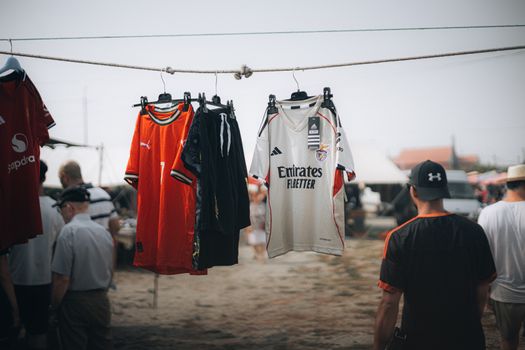
The sight of a new football jersey unveiled on pitch day is a moment fans and players alike eagerly anticipate. But behind that bold design, signature colors, and innovative fabric lies a fascinating journey—a blend of art, technology, teamwork, and tradition. From the first pencil sketch to the dramatic pitch debut, the creation of a football jersey is a complex process that shapes not only a team’s look but also its identity and commercial success.
The Creative Spark: Where Football Jersey Ideas Begin
Every great football jersey starts with a concept, and the inspiration can come from anywhere. Designers often look to a club’s heritage, local culture, or even global trends to fuel their imagination. For example, when Nike designed the 2018 Nigeria World Cup jersey, they drew inspiration from the nation's 1994 kit and iconic patterns from Nigerian fashion. The result? Over three million pre-orders, making it one of the fastest-selling football shirts in history.
A typical journey begins with a creative brief provided by the club or federation. This brief outlines essential elements: team colors, logos, sponsor placements, and sometimes, nods to historic victories or local landmarks. Designers might sketch dozens of rough ideas, experimenting with stripes, sashes, chevrons, or abstract graphics. Modern software like Adobe Illustrator and 3D rendering tools now allow them to visualize how a design will look on a moving athlete, saving time and enabling rapid iterations.
.png)
Balancing Heritage and Innovation in Jersey Design
One of the biggest challenges in football jersey design is balancing respect for tradition with the need for innovation. Fans are deeply attached to their club’s history, and any drastic changes can spark controversy. For instance, when Cardiff City switched their home colors from blue to red in 2012, there was a significant backlash, even though the decision was commercially motivated.
Designers must walk a fine line. Classic elements—such as a club's crest, specific color schemes, or a retro collar—often remain untouched. At the same time, forward-thinking features like gradient fades, geometric patterns, or bold sleeve designs can offer a fresh twist. For instance, Juventus’ 2019-2020 half-and-half kit broke over a century of tradition but became a bestseller and a talking point worldwide.
Below is a table comparing some of the classic versus modern jersey elements found in top teams:
| Design Feature | Classic Jerseys (Pre-1990s) | Modern Jerseys (2010s-2020s) |
|---|---|---|
| Fabric Material | Cotton, heavy polyester blends | Lightweight recycled polyester, moisture-wicking tech |
| Graphics | Simple stripes, solid colors | Digital prints, gradients, bespoke patterns |
| Sponsor Logos | Minimal, sometimes absent | Prominent, multiple sponsors possible |
| Fit | Loose, boxy fit | Slim, athletic cut for performance |
| Customization | Basic name and number | Advanced font styles, national flags, tributes |
From Concept to Prototype: The Technical Side of Jersey Creation
Once the design is approved, the process moves from the digital world to physical reality. This stage involves a close partnership between designers, fabric engineers, and manufacturers. Material selection is critical—not just for comfort but for performance. Modern football jerseys use advanced polyester blends that weigh as little as 150 grams and can wick sweat away from the skin 30% faster than fabrics from just a decade ago.
Prototyping involves printing the design on test fabrics, sewing sample shirts, and then subjecting them to rigorous testing. Top clubs like FC Barcelona and Manchester United work with manufacturers such as Nike, Adidas, or Puma to test jerseys for durability, breathability, and even thermoregulation. In some cases, players are invited to wear prototype kits during training to provide feedback on fit, comfort, and movement. According to Adidas, their AEROREADY fabric technology reduces player overheating, contributing to a 7% improvement in on-field endurance during tests.
Branding, Licensing, and Commercial Strategy
The football jersey is more than just a piece of sportswear—it’s a vital commercial asset. Global shirt sales generate enormous revenue for clubs and brands. For instance, Manchester United reportedly sold over 3 million jerseys in 2022, bringing in over $80 million from merchandise sales alone.
Branding decisions—such as the placement of sponsor logos, inclusion of commemorative patches, and even the release schedule—are orchestrated with marketing teams. Limited-edition kits, collaborations with fashion designers, and retro reissues are now common strategies to boost sales and fan engagement. In 2020, Paris Saint-Germain’s partnership with Jordan Brand resulted in a 470% increase in international jersey sales, highlighting how strategic alliances can redefine a club’s global image.
Licensing is also crucial. Only authorized manufacturers are permitted to produce and distribute official jerseys. This not only protects clubs’ intellectual property but also assures quality and authenticity for fans. Anti-counterfeit measures—such as holographic tags and QR codes—are now standard, as the global counterfeit sportswear market was estimated at $450 billion in 2023.
Debuting the Jersey: The Power of the Pitch Launch
The unveiling of a new football jersey is a spectacle in itself. Clubs use launch events, social media campaigns, and influencer partnerships to maximize excitement and anticipation. In 2021, Inter Milan’s “snake skin” kit was teased with a viral video, amassing over 10 million views within the first week.
The first appearance of the kit on the pitch is carefully choreographed. Players wear the new strip in a high-profile friendly or season opener, knowing millions are watching. These moments often translate directly to sales. According to UEFA, clubs can see a 35% spike in merchandise sales within 48 hours of a successful kit debut.
Additionally, the emotional connection formed during these unveilings is powerful. Fans who buy the new jersey are not just purchasing apparel—they’re becoming part of a story, a tradition, and a community.
Eco-Friendly Innovations: The Rise of Sustainable Football Jerseys
As environmental concerns grow, football jersey design has entered a new era: sustainability. Major manufacturers now produce jerseys using recycled plastics and environmentally friendly dyes. For the 2022 World Cup, Adidas created all its national team kits using a minimum of 50% recycled materials, saving an estimated 1,200 tons of virgin plastic.
Clubs themselves are getting involved. In 2021, Real Betis introduced a kit made entirely from ocean-reclaimed plastics, while Hummel’s “Green Jersey” initiative has encouraged lower-league teams to switch to recycled fibers. These moves not only reduce the sport’s ecological footprint but also resonate with younger, eco-conscious fans.
Sustainability also extends to packaging and distribution, with some clubs opting for biodegradable packaging and carbon-neutral shipping. This shift is not just a trend—it’s quickly becoming an expectation, as over 60% of football fans surveyed in 2023 said they would pay extra for a sustainably made jersey.
Final Thoughts: The Enduring Impact of Football Jersey Design
The journey of a football jersey, from the spark of a designer’s sketch to its triumphant debut on the pitch, is a testament to the power of creativity, technology, and community in sport. Each stage—concept, prototyping, branding, launch, and even sustainability—shapes not only a team’s image but also the memories and identities of fans around the world.
In a single piece of fabric, history and future, artistry and performance, commerce and culture all come together. The next time you see a team take the field in a fresh new kit, remember: you’re witnessing the culmination of months (sometimes years) of innovation, debate, and passion.