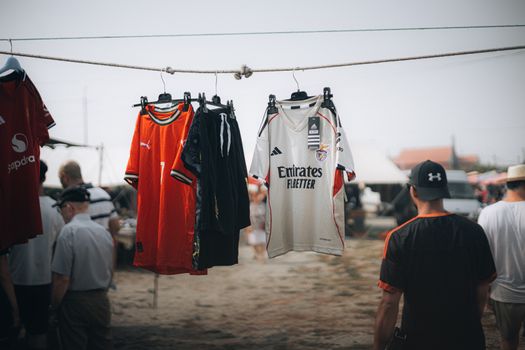
If you’re a passionate football fan, owning an authentic jersey is more than just a way to show support for your team—it’s a badge of loyalty, a collector’s item, and even an investment. But with the global replica market estimated to be worth over $500 million annually, counterfeit jerseys are everywhere. Whether you’re buying online, at a local shop, or from a street vendor, learning how to identify an authentic football jersey from a fake is crucial. This comprehensive guide will walk you through the key markers of authenticity, the most common mistakes counterfeiters make, and practical steps to make sure your next jersey is the real deal.
The High Stakes: Why Authenticity in Football Jerseys Matters
Football jerseys are more than just sportswear—they’re cultural symbols and, for many, cherished possessions. According to a 2023 report by Statista, official football merchandise sales topped $3.3 billion globally, and jerseys made up over 60% of that figure. With such high demand, counterfeiters have become increasingly sophisticated, making fakes harder to spot.
But why does authenticity matter? Genuine jerseys: - Support your favorite clubs and athletes, with licensing fees going directly to teams - Offer superior quality, comfort, and durability - Hold value for collectors, sometimes appreciating in worth (game-worn shirts have sold for over $10,000 at auction) - Avoid legal risks or ethical issues associated with counterfeit tradeUnfortunately, fake jerseys often lack these qualities. They may fade quickly, feature misspelled names, or use inferior materials that affect comfort and fit. For fans and collectors, spotting the difference is essential.
.png)
Material and Manufacturing: Key Physical Differences
One of the first signs of an authentic football jersey is the quality of materials and construction. Genuine jerseys, whether “player issue” or “fan replica,” use advanced fabrics and precise manufacturing.
- $1 Top brands like Nike, Adidas, and Puma invest millions in fabric innovation. For example, Nike’s Dri-FIT and Adidas’s Climalite are engineered to wick away sweat and regulate temperature. Fakes often use generic polyester, lacking these performance properties. - $1 Authentic shirts tend to be lighter and softer. Counterfeits may feel heavy or stiff due to cheaper materials. - $1 Examine the seams and hems. Authentic jerseys have tight, even stitching with no loose threads. Fakes often have uneven seams, visible glue, or fraying. - $1 Official crests and manufacturer logos are usually heat-pressed or embroidered with great precision. On fakes, these may be crooked, peeling, or made from low-quality plastic.A side-by-side comparison can make these differences clear. For instance, in 2022, a study by the European Union Intellectual Property Office found that 8 out of 10 counterfeit jerseys analyzed had visible stitching flaws or badge inaccuracies.
Spotting Authenticity Markers and Security Features
Modern football jerseys are equipped with several security features to combat counterfeiting. Knowing these can make identification much easier:
- $1 Most top leagues and brands now include a holographic sticker or a woven authenticity tag near the hem or inside the collar. These tags often contain a serial number or QR code that can be checked on the official website. - $1 Authentic jerseys come with branded hangtags, detailing the product code, size, and barcode. Look for spelling errors or poor print quality, which are red flags. - $1 Some teams embed faint watermarks, microtext, or even ultraviolet details only visible under a blacklight.Let’s take the 2023 Manchester United home kit as an example. Genuine versions have an Adidas authenticity patch with a unique code, a Premier League hologram on the sleeve, and retail tags in three languages. Fakes often miss at least one of these elements or use generic tags.
Design Accuracy: Details That Counterfeiters Get Wrong
Even the most convincing fake jerseys often slip up on the finer details. Here’s what to check:
- $1 Official clubs release exact Pantone shades for their kits. Counterfeits may use colors that are slightly off—too bright, dull, or with a visible color bleed. - $1 Authentic jerseys use licensed fonts for player names and numbers, often with laser-cut ventilation holes. Fakes might use incorrect fonts, wrong sizing, or poor-quality printing that peels after a few washes. - $1 Official shirts use high-quality screen prints or heat transfers for sponsors. Fakes may have sponsors in the wrong position, incorrect font, or poor-quality print that cracks easily.A notable example occurred in 2021, when thousands of fake Chelsea jerseys were seized in the UK. Most had the “Three” sponsor logo slightly misaligned or in the wrong shade of blue, making them easy to spot for trained eyes.
Price, Place, and Provenance: Contextual Clues to Authenticity
Where and how you buy your jersey can be as telling as the jersey itself.
- $1 If a deal seems too good to be true, it probably is. Official player-issue jerseys often retail for $120-$150, while fan replicas are $80-$100. Fakes may be sold for as little as $20-$40. - $1 Always buy from official club stores, licensed retailers, or major online platforms with a reputation for authenticity. Auction sites, social media ads, or market stalls are high-risk. - $1 Ask for receipts, certificates of authenticity, or proof of purchase, especially for limited-edition or signed jerseys.To help, here’s a quick comparison table highlighting the key differences:
| Feature | Authentic Jersey | Fake Jersey |
|---|---|---|
| Material | Advanced, lightweight, moisture-wicking | Basic polyester, heavier, less breathable |
| Stitching | Even, tight, no loose ends | Irregular, loose, visible glue |
| Badges/Logos | Precision embroidery or heat-pressed | Crooked, peeling, low-quality |
| Security Tags | Hologram, QR code, serial number | Usually missing or generic |
| Retail Price | $80–$150 (retail) | $20–$60 (often discounted) |
| Packaging | Official tags, branded packaging | Plain or unbranded packaging |
Using Technology to Verify Your Football Jersey
In recent years, technology has become a powerful ally in the fight against counterfeit jerseys. Here are some digital tools and strategies you can use:
- $1 Many brands now include QR codes on authenticity tags. Scanning them with your smartphone should take you to the manufacturer’s database or verification page. If the code leads to a generic site or fails, it’s likely a fake. - $1 Brands like Nike and Adidas offer online lookup tools. Enter the serial number from the jersey’s tag to confirm if it matches an official product. - $1 Some clubs, like FC Barcelona and Juventus, have experimented with AR features that let you scan the jersey’s crest to access exclusive digital content, verifying authenticity in the process. - $1 If buying online, use a reverse image search to check if the product photos are stolen from official sites—a tactic common with counterfeit listings.According to a 2023 report from FIFA’s Intellectual Property Unit, over 25% of counterfeit jerseys intercepted globally in the past year were identified thanks to digital verification methods.
Caring for Your Authentic Jersey: Protecting Your Investment
Once you’ve secured an authentic jersey, proper care will help maintain its value and appearance. Here are a few expert tips:
- $1 Turn the jersey inside out, use cold water, and avoid harsh detergents. Never use bleach or fabric softener. - $1 Avoid the dryer, which can shrink fabric and damage heat-pressed logos. - $1 Hang your jersey or fold it loosely. Avoid direct sunlight, which can fade colors. - $1 Oils and dirt can stain or degrade fabric over time.Collectors often store valuable jerseys in acid-free boxes or display cases with UV protection. This is especially important for signed or match-worn shirts, which can fetch thousands at auction if kept in pristine condition.
Final Thoughts on Spotting Authentic Football Jerseys
The thrill of wearing your favorite club’s official jersey is unbeatable, but so is the disappointment of realizing you’ve bought a fake. By paying close attention to materials, manufacturing details, security features, and the reputation of your retailer, you can dramatically reduce your risk. With technology on your side and a little bit of knowledge, identifying an authentic football jersey from a fake becomes a straightforward process.
As the counterfeit industry grows more sophisticated, fans need to stay alert and informed. Not only does buying authentic support your team and guarantee quality, but it also helps preserve the value and legacy behind every iconic shirt. Whether you’re a new fan or a seasoned collector, a genuine jersey is always worth the investment.