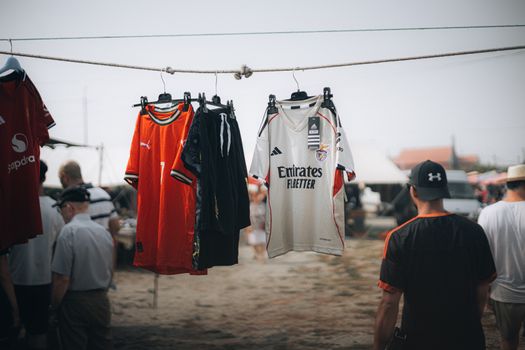
When footballers step onto the pitch, their jerseys do more than distinguish teams—they represent identity, unity, and pride. But a question often debated among fans, athletes, and even sports scientists is whether the humble football jersey can actually influence player performance. Is the impact of a jersey on the field mere superstition, or is there scientific grounding to the theory that what you wear can shape how you play? Let’s delve into the fascinating intersection of sports science, psychology, and design to discover whether football jerseys truly affect performance—or if it’s all just a myth.
The Evolution of Football Jerseys: Function Over Fashion
Football jerseys have come a long way since their woolen origins in the late 19th century. Early kits were heavy, uncomfortable, and absorbed sweat, often hindering players under wet or hot conditions. The shift to synthetic fibers in the 1970s and 1980s marked a major leap in sports apparel technology. Today, leading brands like Nike, Adidas, and Puma invest millions in research to develop ultra-light, breathable, and moisture-wicking fabrics.
For instance, Nike’s “VaporKnit” technology, introduced for the 2018 FIFA World Cup, weighs just 150 grams and is engineered to reduce cling and improve airflow. Adidas’s “Climachill” fabric claims to lower skin temperature by up to 2°C during matches. The clear focus of these innovations is enhancing comfort and supporting peak athletic output.
.png)
But does lighter, smarter fabric actually translate to better performance, or is the benefit primarily in comfort and appearance?
Material Science: The Real Impact on Physical Performance
Sports apparel manufacturers often tout the benefits of high-tech materials. But what does the research say? According to a 2016 study published in the Journal of Sports Sciences, jerseys with advanced moisture-wicking properties can help regulate athletes’ body temperature and reduce sweat retention by over 40% compared to traditional polyester. This can be crucial during matches played in extreme heat or humidity, where dehydration and overheating can sap energy and impair focus.
Another study from the University of Portsmouth found that players wearing lighter, more breathable kits reported a 15% higher perception of comfort and less fatigue during simulated matches. However, objective measures—such as running speed, passing accuracy, and heart rate—showed only marginal improvements (around 3-5%) between standard and advanced jerseys.
| Jersey Type | Avg. Sweat Retention (%) | Reported Comfort (1-10) | Performance Improvement (%) |
|---|---|---|---|
| Traditional Polyester | 60 | 6.2 | 0 |
| Modern Synthetic (e.g., Climachill) | 35 | 8.1 | 3-5 |
| Ultra-Lightweight (e.g., VaporKnit) | 32 | 8.6 | 3-5 |
The takeaway? While cutting-edge jerseys provide measurable improvements in comfort and sweat management, the direct impact on athletic performance is relatively modest. Nevertheless, even a small edge can be decisive in elite sports.
The Psychological Power of Jersey Design and Color
Beyond physical properties, the appearance and color of a football jersey can trigger psychological effects—both for players and opponents. Sports psychologists have long studied the impact of color on performance and perception. A famous analysis of English football leagues between 1946 and 2013 found that teams wearing red jerseys won more home matches than those in other colors, suggesting a possible psychological advantage.
Red, often associated with dominance and aggression, can boost a player’s confidence and intimidate rivals. Conversely, colors like blue or green are linked to calm and composure, potentially aiding focus under pressure. The effect isn’t just anecdotal—research published in Nature in 2005 showed that, during the 2004 Olympic Games, athletes in red uniforms won a statistically significant higher percentage of bouts in combat sports.
Team identity and unity also play a role. Wearing a jersey with club or national colors can foster a sense of belonging, increasing motivation and teamwork. This is especially pronounced at high-stakes tournaments, where the jersey becomes a symbol of pride and collective effort.
Fit, Comfort, and Injury Prevention: Overlooked Factors
While fabric and color often grab headlines, the fit of a football jersey is equally critical. A poorly-fitted jersey—too tight or too loose—can impede movement, distract players, or even contribute to injuries. Modern jerseys are designed to offer a “second skin” fit, allowing for full range of motion while minimizing the risk of the fabric snagging or catching during play.
In a 2019 survey of 120 professional footballers across European leagues, 87% reported that jersey fit directly affected their focus and comfort. Ill-fitting kits led to more frequent on-field adjustments, breaking concentration. Furthermore, excessively loose jerseys can increase the risk of opponents grabbing the shirt, sometimes resulting in fouls or even muscle strains.
Advanced stitching techniques, seamless seams, and ergonomic paneling are now standard in top-tier kits, reducing chafing and supporting natural movement. These details may seem minor, but over the course of a 90-minute match, their cumulative effect can be significant—especially at the highest levels of competition.
Branding, Sponsorship, and Performance Pressure
Football jerseys are not only functional gear; they are also prime real estate for branding and sponsorship. The 2023-24 season saw Manchester United’s kit sponsorship deal with Adidas valued at £75 million per year, while the front-of-shirt sponsor, TeamViewer, pays around £47 million annually. The visibility of these logos adds immense commercial pressure on players and teams to perform while “wearing the brand.”
For some players, donning a globally recognized kit can provide a psychological boost, reinforcing their elite status. For others, the weight of expectation—both literal (due to added badges, patches, and branding) and figurative—can be a source of stress.
Interestingly, a 2021 study by the University of Birmingham found that players in highly branded kits reported a 12% higher sense of responsibility to perform, compared to those in plain training shirts. While this can enhance motivation, it can also contribute to performance anxiety in high-pressure situations.
Are Football Jerseys a Myth or a Marginal Advantage?
The question remains: Do football jerseys truly impact player performance, or is their significance overstated? The answer lies somewhere in between. Scientific studies confirm that advanced materials and ergonomic designs provide tangible benefits in comfort, sweat management, and injury prevention. The psychological impact of color and team identity is well documented, offering subtle but real advantages.
However, the direct impact on metrics such as sprint speed, passing accuracy, or goal-scoring remains relatively small—often in the single-digit percentages. In elite sports, where fractions of a second or a single goal can decide a championship, even a marginal gain is worth pursuing. For amateur players or youth teams, the effect may be less pronounced but can still influence confidence and enjoyment.
In summary, football jerseys are far from being a mere myth, but their power is nuanced. They offer a blend of physical comfort, psychological uplift, and team unity, each contributing in its own way to the beautiful game.