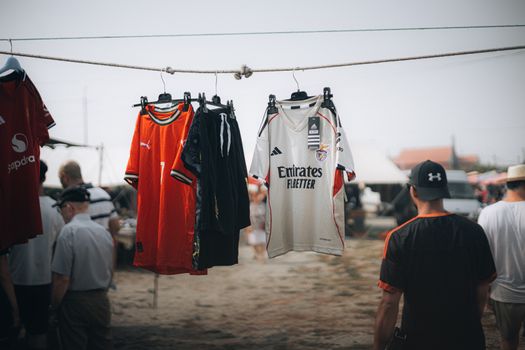
Football, known as soccer in some parts of the world, is a sport that thrives on tradition, identity, and visual spectacle. One of the most recognizable aspects of any football club or national team is its kit—the uniform players wear on the field. Among the essential components of a football kit are the home and away jerseys. While to a casual observer these might seem like just color variations, home and away football jerseys have distinct purposes, rules, and histories that have shaped their evolution. In this article, we’ll explore the key differences between home and away football jerseys, examine their significance, provide examples from top clubs and countries, and break down how these differences impact the game and its culture.
The Origins and Purpose of Home and Away Jerseys
The concept of teams wearing different jerseys for home and away games dates back over a century. In the early days of organized football, teams often wore whatever colors they liked. However, as the sport grew and competitions became more formalized, the need to avoid jersey clashes became clear. If two teams showed up in similar colors, distinguishing between them on the pitch could be challenging for players, referees, and fans alike.
To address this, governing bodies introduced rules requiring teams to have two different kits: a primary kit (the home jersey) and a secondary kit (the away jersey). The home jersey is typically worn when playing at the team’s own stadium or ground, while the away jersey is used when playing at the opponent’s venue, especially if the home team’s colors would clash with the visiting team’s kit.
.png)
The main purpose of this system is clarity—ensuring that both teams are easily distinguishable during a match. Today, FIFA and domestic leagues have strict regulations about kit contrasts, reinforcing the importance of having distinct home and away jerseys.
Design Differences: Colors, Patterns, and Symbolism
The most obvious difference between home and away football jerseys is their color scheme. Home jerseys are almost always designed in a team’s traditional colors, representing the club’s identity and history. For example, Manchester United’s home jersey is famous for its red, Real Madrid’s is white, and Barcelona’s is a combination of blue and garnet.
Away jerseys, on the other hand, offer much more flexibility in design. Their primary function is to provide a strong contrast with the home team’s kit, so the color and style can vary widely from season to season. This variety allows for creative design choices, sometimes leading to bold, unexpected, or even divisive jerseys that spark debate among fans.
Symbolism also plays a role. Home jerseys often feature classic designs with subtle changes year to year, emphasizing continuity and tradition. Away jerseys, however, provide an opportunity for clubs to experiment, pay tribute to local culture, or mark anniversaries. For instance, in the 2022/23 season, Arsenal’s away kit featured a striking black and gold design—a sharp departure from their red and white home jersey, and a nod to London’s modern streetwear culture.
Regulatory Guidelines and Kit Selection on Matchday
Football’s governing bodies, including FIFA, UEFA, and domestic leagues, have clear rules regarding kit selection to prevent confusion on the pitch. These regulations cover not only color but also elements like logos, sponsor placement, and even sleeve patches.
When teams prepare for a match, the home team gets priority in choosing its kit—almost always opting for the home jersey. The away team must then select a jersey that does not clash with the home kit. If neither the home nor away kit provides sufficient contrast, some clubs have a third (alternate) kit specifically designed for rare clashes.
Here are a few key regulatory facts: - FIFA’s Laws of the Game (Law 4) stipulate that teams must wear colors that distinguish them from each other and the match officials. - In the English Premier League, teams must submit their three kit designs before the season starts, and league officials approve them to ensure no clashes will occur. - In the 2022 FIFA World Cup, all 32 teams had at least two registered kits, with several teams unveiling unique away jerseys specifically for the tournament.Commercial and Cultural Impact of Home vs. Away Jerseys
The difference between home and away jerseys isn’t just practical—it’s also big business. According to a 2021 report by Statista, global football kit sales exceeded $4.7 billion annually. While home jerseys account for the majority of sales due to their iconic status, away jerseys have become increasingly popular among fans seeking something unique or trendy.
The away jersey often allows for more daring collaborations with designers or artists, limited-edition releases, and even nods to important historical moments. For example, Nigeria’s 2018 World Cup away kit sold out within minutes due to its bold, modern design, highlighting the growing commercial significance of away shirts.
The cultural impact is also significant. Fans often collect both home and away jerseys as expressions of loyalty, style, and identity. In some cases, away kits have become symbols in their own right—think of Italy’s “Azzurri” blue home shirt versus their white away kits, each carrying its own legacy.
Home and Away Jerseys: A Comparative Overview
To better understand the practical and stylistic distinctions between home and away football jerseys, here’s a side-by-side comparison:
| Aspect | Home Jersey | Away Jersey |
|---|---|---|
| Primary Purpose | Worn during home games; symbolizes club identity | Worn during away games; prevents kit clashes |
| Color Scheme | Traditional club colors (e.g., red for Liverpool) | Contrasting or alternative colors, often non-traditional |
| Design Consistency | Usually consistent year to year | Often changes dramatically each season |
| Fan Perception | Seen as iconic and essential | Viewed as trendy, collectible, sometimes experimental |
| Sales Figures | Typically highest-selling kit | Increasingly strong sales, especially with unique designs |
| Historical Significance | Heavily tied to club history and milestones | Used for special tributes or events; less tradition-bound |
Examples from Famous Clubs and International Teams
The distinction between home and away jerseys is evident when looking at some of the world’s most storied clubs and national teams.
Manchester United, for instance, has worn a red home shirt since 1902, with only minor variations. Their away kits, however, have ranged from white and blue to black and even gold over the decades. In the 1995/96 season, their infamous grey away kit was retired at halftime during a match against Southampton due to poor visibility, highlighting the practical importance of away jersey selection.
At the international level, Brazil’s home kit is synonymous with bright yellow shirts, blue shorts, and white socks—a combination chosen after the heartbreak of the 1950 World Cup defeat, replacing their previous white home kit. Their away kit, typically blue, offers a distinct alternative and has been worn in several historic matches.
Similarly, Germany’s national team is known for its white home kit and black shorts, while their away kit has featured green, red, and even black over the years. These changes not only serve practical purposes but also reflect evolving cultural and stylistic trends within football.
Why Understanding the Difference Matters for Fans and Collectors
For supporters, the distinction between home and away jerseys goes beyond mere aesthetics. Wearing a home jersey often signifies a deep connection to a club’s roots and values, while donning an away kit can express individuality or commemorate a memorable season.
Collectors, too, pay close attention to the differences. Vintage away kits, especially those associated with famous victories or unforgettable designs, can fetch high prices at auction. For example, a rare 1990 West Germany away shirt sold for over $1,000 in 2022, reflecting both its rarity and cultural resonance.
Moreover, understanding the purpose and history behind home and away jerseys enhances the appreciation of football’s rich traditions. It connects fans to the broader story of the game and the communities that shape it.
Final Thoughts on the Difference Between Home and Away Football Jerseys
The distinction between home and away football jerseys is far more than a matter of color. It encompasses tradition, identity, regulation, commerce, and culture. Home jerseys ground a team in its heritage, while away jerseys offer room for innovation and adaptation. Both are essential to the sport, ensuring clarity on the field and offering fans new ways to connect with their teams each season. As the football world continues to evolve, so too will the designs and significance of these iconic garments—ensuring plenty of excitement, debate, and passion for years to come.