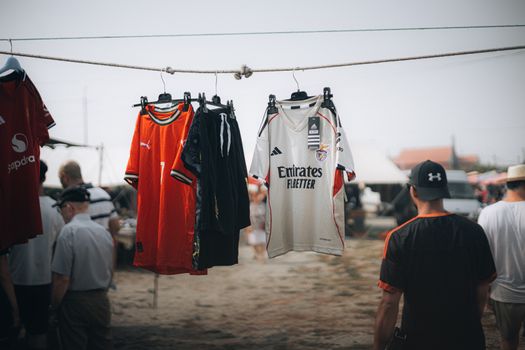
When you watch a football match, one of the most immediately noticeable features is the contrasting jerseys worn by each team. Whether it’s a high-stakes World Cup game or a local league derby, the teams are differentiated by their colors and designs. But have you ever wondered why teams have home and away football jerseys, and what exactly sets them apart? Beyond just color choices, the distinction between home and away kits touches on deep traditions, league rules, fan culture, and even commercial interests. This article dives into the fascinating world of football jerseys, exploring the key differences, the history behind them, and their significance both on and off the pitch.
The Origins: Why Two Sets of Jerseys?
The tradition of having both home and away jerseys dates back to the early 20th century, when football matches became more organized and standardized. In the early days, teams would often show up in their own colors, resulting in confusion if two clubs wore similar hues. To solve this, the concept of designated “home” and “away” kits was introduced.
The home jersey usually represents a club’s traditional or primary colors—think FC Barcelona’s iconic blue and garnet stripes, or Real Madrid’s all-white kit. Away jerseys, on the other hand, are designed to contrast with the home kit, often featuring alternate colors. This helps referees, players, and spectators clearly distinguish between teams during play.
.png)
Interestingly, FIFA regulations stipulate that both teams must wear kits that clearly distinguish them from each other and the match officials. In fact, a 2018 FIFA report stated that 70% of kit clashes involve away teams, which underscores the importance of having alternate jerseys.
Design Differences: Home vs. Away Football Jerseys
The most obvious difference between home and away football jerseys lies in their design. Home jerseys almost always feature a club’s primary colors and familiar motifs. These kits are meant to embody the club’s heritage and identity. For example, Manchester United’s home kit is always predominantly red—a tradition dating back to their formation in 1878.
Away jerseys, however, are more experimental. Clubs use these kits as opportunities to try new color palettes, patterns, and even materials. For instance, Juventus has worn away kits in colors as varied as pink, yellow, and even green, far removed from their black-and-white home stripes.
Here’s a side-by-side comparison to highlight some common differences:
| Aspect | Home Jersey | Away Jersey |
|---|---|---|
| Primary Colors | Traditional club colors | Contrasting/alternate colors |
| Design Approach | Consistent, classic | Experimental, trendy |
| Frequency of Use | Most home matches | Primarily away games or when kit clash occurs |
| Fan Sentiment | Strong emotional attachment | Varied; can be polarizing |
| Collectibility | Higher due to tradition | Higher for unique or limited releases |
Rules and Regulations Governing Home and Away Kits
Football’s governing bodies have strict rules regarding kit selection. According to FIFA’s Laws of the Game, “Each team must have two sets of kits in contrasting colors.” In most leagues, the home team has the right to wear their primary kit, while the away team must change if there is a potential clash.
For instance, in the English Premier League, clubs must submit proposed kit designs for approval before the season starts. Teams also have to specify which games they will wear each kit. In rare cases, when both the home and away kits clash with the opposition, a third “alternate” kit is used—an occurrence that happens in about 5-7% of matches annually, according to Premier League statistics.
Moreover, there are regulations ensuring that kits do not clash with the referee’s uniform or with advertising requirements. This attention to detail is crucial for player safety and visual clarity, especially in televised matches watched by millions worldwide.
Emotional and Cultural Significance
For many fans, a team’s home jersey is sacred. It’s the kit most associated with legendary victories, historic moments, and club legends. For instance, Liverpool’s all-red kit is synonymous with their five Champions League triumphs. Home kits are often passed down through generations, featuring in family photos and treasured collections.
Away kits, by contrast, often reflect a club’s willingness to innovate and reach new audiences. They frequently incorporate colors or patterns that pay homage to a city’s culture or a historic milestone. In 2020, FC Barcelona’s away kit featured a bold black-and-gold design, symbolizing the club’s ambition and modernity. Such designs can become instant classics or, conversely, the subject of heated debate among fans.
From a cultural standpoint, away kits also enable clubs to appeal to international markets. For example, in 2019, Manchester City wore a neon yellow-and-peach away kit that quickly became a bestseller in Asian markets, proving the commercial power of bold design choices.
Commercial Impact: Sales and Merchandise Trends
The difference between home and away football jerseys isn’t just about tradition or gameplay—it’s big business. According to the European Club Association, global football jersey sales exceeded 20 million units in 2022, with away kits accounting for nearly 40% of those sales. This underscores how alternate designs can drive revenue for clubs.
Home jerseys tend to have consistent sales due to their iconic status. However, away and third kits can generate spikes in merchandise revenue, especially when linked to special events or unique collaborations. For example, the Paris Saint-Germain (PSG) x Jordan Brand away kit in 2018 sold out within hours of its release, making it one of the fastest-selling football shirts of all time.
Clubs often use away kits as a platform for fashion-forward partnerships. In 2021, Arsenal’s “bruised banana” retro away kit, a nod to their 1991 design, sold over 150,000 units in its first month—a testament to the power of nostalgia and creative design.
Practical Considerations: When Are Away Jerseys Used?
While home jerseys are worn at a club’s own stadium, away kits are used in various scenarios:
1. $1: The most common reason is to avoid confusion with the home team’s colors. If both teams’ home kits are similar, the away team switches to their alternate jersey. 2. $1: Clubs may wear away kits during cup finals, commemorative matches, or international tournaments to mark the occasion. 3. $1: Some clubs deliberately wear away kits for high-profile matches to boost merchandise sales and visibility.In some leagues, like Major League Soccer (MLS) in the United States, the rules are more flexible, with teams occasionally wearing away kits at home to promote new merchandise launches or celebrate community events.
Final Thoughts on the Difference Between Home and Away Football Jerseys
The distinction between home and away football jerseys is far more than a matter of color. It’s a complex blend of tradition, regulation, commercial strategy, and fan culture. Home jerseys root a club in its history, serving as a symbol of identity and pride. Away kits, meanwhile, offer creative freedom, global marketing opportunities, and a chance for fans to embrace something new each season.
With millions of jerseys sold worldwide each year, and clubs constantly pushing the boundaries of design and technology, the difference between home and away kits continues to evolve. Whether you’re a lifelong supporter or a casual observer, understanding these differences enhances your appreciation for the beautiful game and its rich tapestry of tradition and innovation.