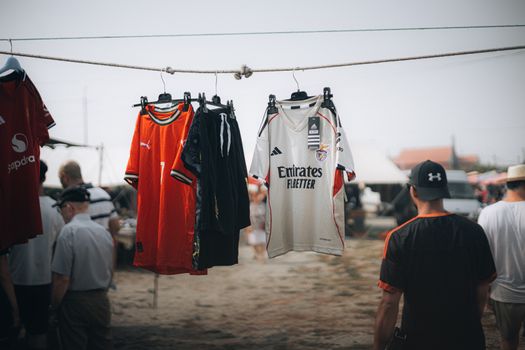
Football jerseys are far more than mere athletic apparel. Over the decades, they have grown from simple team identifiers into powerful emblems of culture, pride, and belonging across the globe. Whether in the bustling streets of Buenos Aires, the passionate stands of Liverpool, or the vibrant neighborhoods of Lagos, the football jersey has evolved into a symbol that transcends sport, representing regional identity, social belonging, and deep-rooted cultural narratives. But how did this transformation happen? Let’s explore the fascinating journey of football jerseys from the pitch to the heart of global culture.
The Humble Origins: From Uniforms to Community Symbols
The earliest football jerseys, dating back to the late 19th and early 20th centuries, were designed purely for function. Teams needed a way to distinguish themselves on the pitch, so clubs like Sheffield FC (founded in 1857) donned colored shirts, often made of heavy cotton. At first, these kits were plain, utilitarian, and devoid of logos or badges.
However, as the popularity of football surged in Europe and South America, jerseys quickly became more than just uniforms. By the 1920s and 1930s, clubs began incorporating badges, stripes, and unique color combinations that resonated with local communities. For instance, the vertical blue and red stripes of FC Barcelona were adopted to reflect Catalonia’s distinct identity within Spain, while Boca Juniors’ blue and gold colors were inspired by the Swedish flag, reflecting the immigrant-rich neighborhoods of Buenos Aires.
.png)
By the mid-20th century, football kits had become a source of pride for fans, a way to visually unite a city or region. Wearing a club’s jersey was a simple, yet powerful, expression of loyalty and community.
Globalization and the Jersey as a Cultural Export
The globalization of football in the latter half of the 20th century propelled the jersey to new heights. Televised matches, international tournaments, and the migration of star players spread the influence of clubs and national teams far beyond their local roots. Football shirts began to serve as cultural ambassadors, carrying regional stories into every corner of the world.
For example, the iconic yellow jersey of Brazil’s national team is instantly recognizable, symbolizing not only footballing excellence but also the joyful, creative spirit associated with Brazilian culture. After Brazil’s 1958 World Cup win, sales of their yellow jersey soared worldwide, igniting a trend of fans in Asia, Africa, and North America adopting foreign teams as their own.
Similarly, European clubs like Manchester United, Real Madrid, and AC Milan saw their jerseys become status symbols in places as diverse as Nigeria, China, and the United States. Wearing a jersey became a way for individuals to connect with global trends, signal cosmopolitanism, or identify with a certain style of play or ethos.
Political and Social Movements: Jerseys as Vehicles of Protest and Solidarity
Football kits have often been used to express political and social messages, sometimes even before players or fans realized their full impact. In divided societies, a football jersey can symbolize resistance, solidarity, or hope.
One striking example is the Celtic versus Rangers rivalry in Glasgow, Scotland. The green and white hoops of Celtic and the blue of Rangers are not just team colors—they reflect deep religious and cultural divisions between the city’s Catholic and Protestant communities. The jersey, in this context, becomes a badge of identity, sometimes inflamed by underlying social tensions.
Another powerful instance occurred in South Africa. During apartheid, the black, green, and gold of the South African national team’s kit became a symbol of unity and the struggle for equality. When the team won the Africa Cup of Nations in 1996, Nelson Mandela, wearing the jersey, helped bridge divides and foster national pride.
In 2018, the Nigerian World Cup jersey, with its bold, zigzag design, became a viral sensation, selling out in minutes. For Nigerians, both at home and abroad, the jersey was more than a fashion statement—it was a proud celebration of national culture and creative energy.
Regional Identity: Local Clubs and Community Pride
While global brands like Real Madrid or Manchester United enjoy international fame, countless local clubs wield immense influence in their own regions. Their jerseys often carry deep personal and collective significance.
Take the Argentine club River Plate, whose white shirt with a red diagonal sash references the “banda roja” worn by boatmen who worked along the Río de la Plata. The jersey’s design is inseparable from the club’s working-class roots and the history of the city itself.
In Japan, the Urawa Red Diamonds’ crimson kit is instantly associated with Saitama’s passionate football culture, while in Turkey, the yellow and navy stripes of Fenerbahçe symbolize pride in Istanbul’s Asian side.
Supporters’ groups, known as ultras or barras bravas, amplify this connection by using jerseys to assert their presence, organize community events, and even influence club politics. In many areas, the football jersey is not just a garment—it’s a passport to belonging, a conversation-starter, and sometimes even a political statement.
Fashion, Pop Culture, and the Rise of Streetwear
In recent years, football jerseys have surged in popularity as mainstream fashion items, blurring the lines between sportswear and streetwear. High-profile collaborations between clubs and fashion designers—think Paris Saint-Germain’s partnership with Jordan Brand, or Adidas’ releases with Japanese icon Yohji Yamamoto—have elevated the jersey to coveted status.
Rappers, influencers, and celebrities are frequently spotted in retro kits, creating new waves of demand. In 2018, the vintage Nigeria kit became a must-have item on the global fashion scene. Even luxury brands like Balenciaga and Off-White have drawn inspiration from football aesthetics.
This crossover into fashion has further cemented the football jersey’s role as a symbol of cultural identity, allowing fans and non-fans alike to use jerseys to express their personality, roots, or sense of style.
Comparing Football Jersey Culture Across Regions
The meaning and significance of football jerseys can vary dramatically from one region to another. The table below summarizes some key differences:
| Region | Primary Symbolism | Iconic Example | Impact on Local Culture |
|---|---|---|---|
| Europe | Regional/City Identity, Historical Rivalries | FC Barcelona’s Blaugrana | Unites/supports language and cultural independence (e.g., Catalonia) |
| South America | Working-Class Pride, Community Roots | Boca Juniors’ Blue & Gold | Reflects immigration, neighborhood loyalty |
| Africa | National Unity, Social Movements | Nigeria’s 2018 World Cup Kit | Drives national pride and creative expression |
| Asia | Modern Identity, Pop Culture Integration | Urawa Red Diamonds’ Crimson | Bridges traditional values and modern global trends |
| North America | Cosmopolitanism, Sport Fandom | LA Galaxy’s Home Jersey | Symbolizes growing soccer culture and diversity |
Why Football Jerseys Remain Powerful Symbols Today
In a world where mass media and technology have made the global feel local—and vice versa—football jerseys continue to serve as touchstones of heritage and belonging. In 2023, the global football apparel market was valued at over $5.5 billion, with jersey sales accounting for nearly 60% of that total. This massive market reflects how deeply jerseys resonate with fans and communities worldwide.
The continued evolution of football kits—through innovative designs, sustainable materials, and collaborations with local artists—ensures their ongoing relevance. Whether it’s a child in Accra dreaming of playing for the Black Stars, or a lifelong Borussia Dortmund fan donning yellow and black at Signal Iduna Park, the football jersey remains a canvas for dreams, memories, and collective identity.